
A Guide to Kodak Portra 400
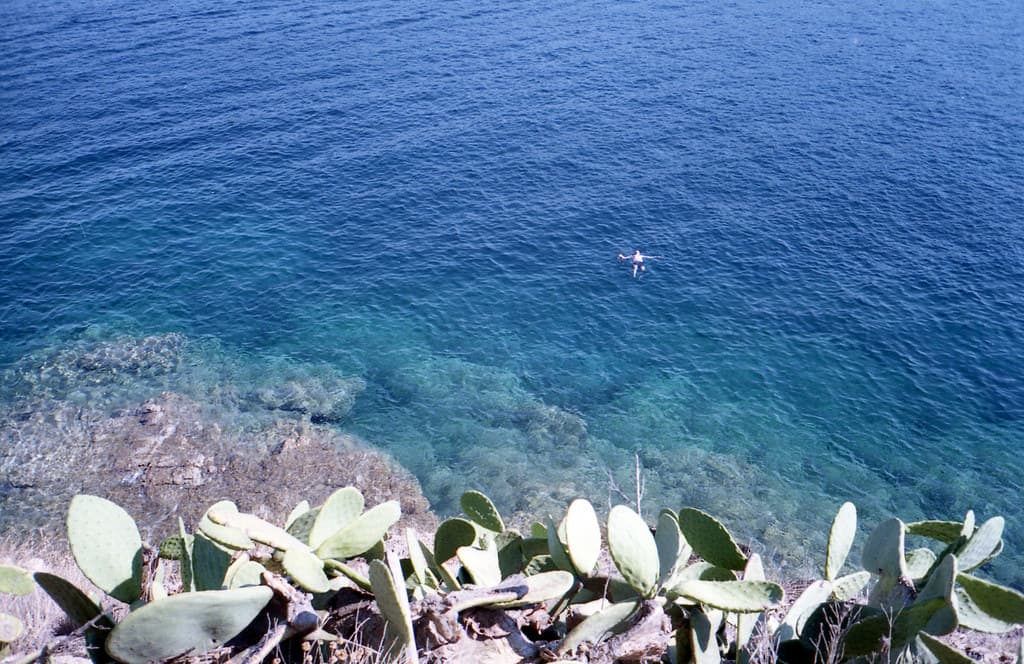
Kodak Portra 400 is an ISO 400 colour negative film known for natural colour, moderate contrast and a lot of exposure latitude.
It was designed with portrait photography in mind, but in practice it works just as well for travel, street photography, landscapes and everyday shooting.
A big part of its popularity comes from how easy it is to use. ISO 400 gives you enough speed for changing light without the heavier grain of faster films, and the negative handles small exposure mistakes well. You can load a roll in the morning, shoot through daylight and shade, and keep using it into the evening without constantly wishing you had chosen a different film.
What does Portra 400 actually look like?
Portra 400 is fairly restrained compared with more saturated colour films. Skin tones tend to stay natural, reds and oranges are controlled, and greens and blues usually have a softer look rather than jumping out of the frame.
Contrast is moderate too. That gives the negative room to hold detail across bright and dark parts of a scene, which is useful when the light is not completely even.
It is worth remembering that there is no single fixed "Portra look". The final image depends heavily on how the negative is scanned. Two labs can scan the same frame and give you noticeably different colour, contrast and brightness, so some of the Portra images you see online owe as much to the scan as they do to the film itself.
Why is it called Portra?
The name comes from portrait photography. Kodak developed the Portra range around accurate skin tones and a relatively controlled colour palette, which made it useful for portrait and wedding photographers.
That does not make it a portrait-only film. The same qualities that work well for people also make Portra 400 useful for travel, architecture, street photography and general day-to-day shooting. It does not force a very strong colour style onto every scene, which gives you more room to decide how the final scan should look.
Exposure latitude is one of its biggest strengths
Portra 400 can handle a fair amount of overexposure before the image starts to fall apart. This is one reason people often describe it as forgiving.
Colour negative film generally prefers a little too much light rather than too little, and Portra 400 is no exception. Giving the film extra exposure produces a denser negative and usually keeps more detail in the shadows. Highlights also have quite a bit of room before they become unusable.
Underexposure is less forgiving. If the shadows do not receive enough light, the negative becomes thin in those areas. A scanner can brighten the image later, but it cannot recover detail that was never recorded. The result is often more visible grain, weaker colour and muddy shadows.
That does not mean you need to overexpose every frame. It simply means that when you are unsure, slightly more exposure is usually safer than slightly less.
Should you shoot Portra 400 at ISO 400?
Yes. Shooting it at box speed is the simplest place to start, and there is nothing wrong with setting your camera to ISO 400 and letting the film behave as Kodak intended.
You will often see people rate Portra 400 at ISO 200. That gives the film one stop more exposure, which can work well in daylight and can give the scanner a denser negative to work with. But it is not a requirement, and it does not automatically make the film look better.
If you are new to Portra 400, shooting a few rolls at ISO 400 first gives you a useful reference point. Once you know how the film behaves normally, it becomes much easier to decide whether you actually prefer giving it extra light.
What happens when you overexpose it?
One stop of overexposure means shooting Portra 400 as if it were ISO 200. Two stops means rating it at ISO 100.
The negative becomes denser as you give it more light, but Portra 400 usually holds onto highlight information surprisingly well. That is why photographers sometimes deliberately expose it more heavily than box speed.
There is still a limit. Very heavy overexposure can flatten the image, make the negative harder to scan and leave you with less useful control over the final result. There is little reason to automatically give every roll two or three extra stops unless you know that is the look you want.
Underexposure is where problems show up faster
Portra 400 can tolerate some underexposure, but the result changes more quickly than it does with overexposure.
One stop under can still produce a usable image, especially in good light. Push it further and shadow detail starts disappearing. When the scan is lifted to compensate, grain becomes more obvious and colour can become less clean.
This is particularly noticeable indoors or at night, where large parts of the image may already sit close to the limit of what the film can record. If the scene is genuinely dark, using a faster film or a wider aperture is usually a better solution than relying on the scanner to rescue a thin negative.
How should you meter it?
If your camera has a reliable built-in meter, set it to ISO 400 and use it normally. There is no need for a special metering method just because you are shooting Portra.
In difficult light, it helps to think about the part of the image you cannot afford to lose. With colour negative film, that is often the shadow detail rather than the brightest highlight. If you are photographing a person against a bright background, for example, exposing properly for the face will usually matter more than trying to protect every bright area behind them.
This is also why Portra 400 works well in uneven light. There is enough latitude in the negative that you do not have to meter every frame with extreme precision.
How good is it in low light?
ISO 400 is versatile, but it is not especially fast once the light gets genuinely low. Indoors or after sunset, shutter speeds can still drop quickly unless you are using a fast lens.
With an f/1.4, f/1.8 or f/2 lens, Portra 400 can cover more situations than you might expect. Put the same film in a compact camera with a slower lens and you will hit its limits sooner.
If most of your shooting happens at night or in dim interiors, Portra 800 can make more sense. It gives you another stop of speed, which can be the difference between a usable handheld shutter speed and a blurred frame.
Can you push Portra 400?
You can. If you rate Portra 400 at ISO 800 and ask the lab to push it one stop during development, you gain some flexibility in lower light.
The trade-off is a change in the negative. Grain becomes more visible, contrast increases and the shadows have less information. Colour can shift as well, especially if the film was already working near the limits of the available light.
Pushing is useful when you need it, but it does not simply turn Portra 400 into Portra 800. If you regularly need ISO 800, using Portra 800 in the first place may give you a cleaner result.
What about pulling it?
Pulling works in the opposite direction. You give the film more exposure and then reduce development.
With Portra 400, this is rarely necessary for normal shooting because the film already handles overexposure well. If you want to rate it at ISO 200, you can generally have it processed normally in C-41 chemistry rather than asking the lab for a one-stop pull.
That keeps the process simple and still gives you the extra exposure you wanted.
Grain and format
For an ISO 400 colour film, Portra 400 has relatively fine grain. In 35mm you will still see it, especially in large scans or prints, but it does not usually dominate the image when the film is exposed properly.
Grain becomes more obvious when the film is underexposed, pushed or heavily brightened during scanning. It also depends on how aggressively the scanner sharpens the file.
In 120 format, the larger negative makes the grain much less noticeable at the same output size. That is one reason Portra 400 is so common in medium format cameras, where you get the flexibility of ISO 400 without giving up much apparent detail.
The scan matters more than people realise
Portra 400 does not come out of the tank looking exactly like the finished images you see online. The negative still has to be interpreted.
During scanning, the lab can change white balance, contrast, saturation, brightness and the way highlights and shadows are handled. Even the scanner itself can influence colour and grain.
If you send the same negative to two different labs, you may get two quite different files back. Neither is necessarily wrong. They are simply different interpretations of the same negative.
If you find a lab whose scans consistently look the way you want, sticking with them can make a bigger difference to consistency than changing film stocks all the time.
What kind of light suits Portra 400?
Portra 400 is daylight balanced, so daylight and open shade tend to give you the most neutral colour without much correction.
Warm indoor lighting will push the image towards orange or yellow. Sometimes that looks good, especially when the warmth is part of the atmosphere. Other times you may want to correct it during scanning or editing.
Mixed lighting is harder because different parts of the scene can have different colour casts. A subject lit by daylight from a window and tungsten light from a lamp may never look completely neutral everywhere in the frame.
That is not a fault with Portra. It is simply how daylight-balanced film responds to different light sources.
Using Portra 400 with flash
Portra 400 works well with flash because ISO 400 gives you useful flash range without making the grain too prominent.
Direct flash will still look like direct flash, though. The film does not soften the lighting or make a harsh flash automatically look natural. The position, power and quality of the flash still have a much bigger effect on the result.
For indoor portraits or night photography, flash can also let you keep using Portra 400 instead of moving to a faster film.
Portra 400 vs Portra 160
Portra 160 is slower and generally gives you slightly finer grain. It suits situations where you have plenty of light and do not need much flexibility with shutter speed.
Portra 400 gives you a little over one stop more speed, which becomes useful as soon as the light changes or you move into shade. If you are carrying one camera for an entire day and do not know exactly what the light will be like, Portra 400 is usually easier to work with.
Portra 160 makes more sense when you know you will be shooting in good light and want the cleaner negative.
Portra 400 vs Portra 800
Portra 800 gives you another stop of speed, which helps indoors, at dusk and anywhere you need a faster shutter.
The extra speed comes with more visible grain and a somewhat different colour response. Portra 400 remains the more flexible all-round choice when you have enough light, while Portra 800 becomes useful once ISO 400 starts forcing shutter speeds that are too slow.
The choice is less about one being better and more about how much light you expect to have.
Is it good in point-and-shoot cameras?
Yes, and the exposure latitude can be useful in simple compact cameras where you have limited control over metering.
Most autofocus point-and-shoots read the ISO automatically from the DX code on the film canister, so you can load Portra 400 and let the camera handle exposure.
The limitation is the camera itself. Older compacts may have ageing shutters, flashes, motors or meters, and the film cannot compensate for a mechanical or electronic fault. A forgiving film helps with small exposure errors, not with a camera that is no longer working properly.
How should you store it?
If you are going to shoot the film reasonably soon, keeping it somewhere cool and dry is enough.
For longer storage, refrigeration slows down ageing. If the film has been in the fridge, let it return to room temperature before opening the sealed packaging so condensation does not form on the film.
Freezing can be useful for very long-term storage, but it is unnecessary for rolls you plan to use in the near future.
Once a roll has been exposed, it is better to have it developed rather than leaving it sitting around indefinitely.
What about expired Portra 400?
Expired Portra can still be usable, but storage matters far more than the date printed on the box.
Film that has been refrigerated can remain in good condition long after its expiry date. Film that has spent years in heat is much harder to predict. You may see colour shifts, more grain, lower contrast or fogging.
That unpredictability can be useful if you want it, but it works against the main reason most people buy Portra 400 in the first place: consistency.
If you are paying normal Portra prices and want reliable colour, fresh film or well-stored expired film is the safer choice.
When does Portra 400 make sense?
Portra 400 makes the most sense when you want one colour film that can cover a lot of situations without much fuss.
It is fast enough for general shooting, the grain stays fairly controlled and the negative gives you useful room when the exposure is not exact. It also responds well to scanning, which gives you flexibility over the final colour and contrast.
There are downsides. It is expensive compared with many consumer films, ISO 400 can still feel slow in dark conditions, and the final result depends heavily on the quality of the scan. If you are looking for very strong saturation or a rougher, more obvious film character, there are other stocks that may suit you better.
A simple way to start with it
If it is your first roll of Portra 400, keep it simple. Set the camera to ISO 400, meter normally and pay more attention to avoiding underexposure than chasing a particular "Portra look".
Shoot it in a few different types of light and have it developed normally. Once you see how the film behaves at box speed, you will have a much better idea of whether you want to give it more exposure, push it in low light or change the way your scans are handled.
That approach is more useful than copying someone else's settings without knowing how their negatives were exposed, developed and scanned.